
About Basalt Learning
Built to be a steady partner for school districts.
Basalt is the rock that forms a strong, lasting foundation. That is the role we want to play for the districts we serve: dependable, clear, and built to last beyond the first year.
Why we started
Why we built SoloSpace™
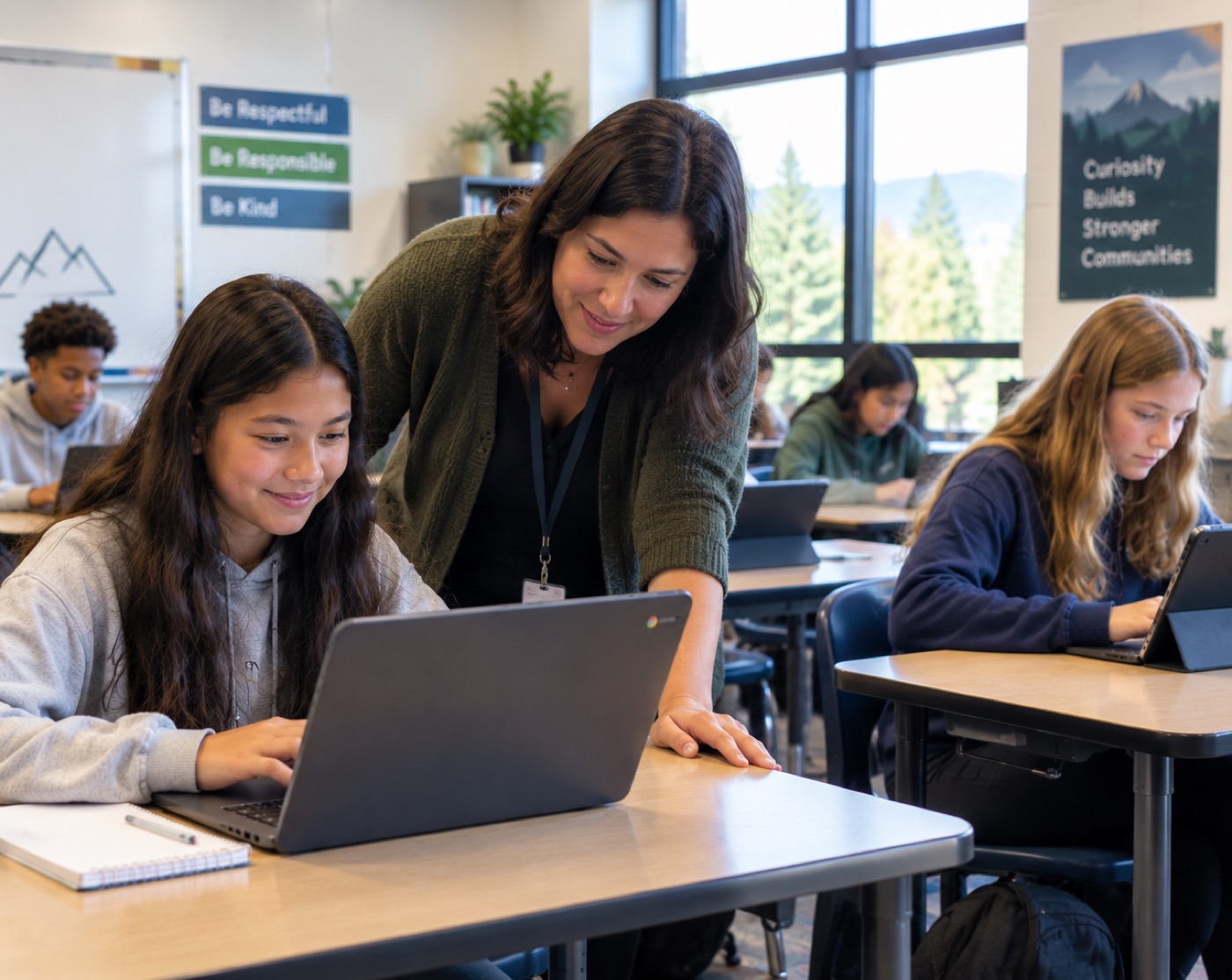
James often says, “Knowing things is better than not knowing things.” The principle is simple, yet it underlies effective teaching: sound instructional decisions depend on accurate evidence of student learning.
The growing accessibility of generative AI has made that evidence harder to obtain. When search engines and chatbots are a click away, completed work no longer reliably reflects a student’s own understanding, and teachers are left with an incomplete picture of what their students know.
SoloSpace was designed to address this challenge. By providing a focused environment free from outside assistance, it allows teachers to gather authentic evidence of what students understand and where their learning is still developing. That evidence supports reflective practice, timely and well-targeted feedback, and instruction that responds to each student’s needs.
Basalt Learning was founded on the belief that teachers deserve high-quality tools to support this work. SoloSpace is our first contribution to that effort.
What guides us
How we work
Evidence over adjectives
We describe what our products do and what changes, and we measure it.
Partnership
Districts lead. We work alongside your team, on your goals and your timeline.
Integrity
We protect student trust and do what is right for students, teachers, and the communities they serve.
Our team
Leadership
Cara Cantonwine
Founder & CEO
Cara knows what it takes to turn educational content into something an agency will put its name on. At Site Altitude, she built an online version of the Fundamentals of Caregiving course from the materials used in the in-person class, then guided it through approval by Washington’s Department of Social and Health Services (DSHS) as a state-certified course. The work called for clear instructional design, careful regulatory detail and steady project management, the same mix she now brings to SoloSpace.
Before turning to education technology, Cara spent years leading organizations from the top. As Executive Director of the Portland Symphonic Choir, she ran every part of the organization: operations, finances, fundraising and marketing. She restored its financial stability and introduced a collaborative leadership model that drew interest from foundations and fellow ensembles. For the City of Vancouver, Washington, she designed a new arts and heritage grant program from the ground up and co-authored the city’s first ordinance regulating special events.
At the Fort Vancouver National Trust, Cara directed large community programs, including the Independence Day celebration at Fort Vancouver, the Veterans Parade and the General George C. Marshall Lecture Series. She led staff and more than 200 volunteers a year, and built lasting partnerships with local businesses. Cara is a recipient of the Vancouver Business Journal’s Accomplished & Under 40 Award and a Leadership Clark County graduate.
James Cantonwine
Co-Founder & Lead Developer
James has spent more than 20 years in public education, and he’s never stopped asking how we know what students actually understand. He started out teaching science and math to middle schoolers, where he conducted action research on diagnostic assessment with physics education researcher Jim Minstrell. From there he led science curriculum work, coached schools on using data well, and served as a high school assistant principal. Today he directs research and assessment for a 9,000-student school district in Washington.
Along the way, James became the person who builds the tool when the right one doesn’t exist. Using generative AI coding tools, he built an AI coaching app for teachers and a secure assessment platform that became SoloSpace. It went from a summer project to real classrooms in a matter of weeks. As he likes to put it, there’s something delightful about using AI to help build a tool that keeps AI out of an assessment.
James also serves on the board of the Washington Educational Research Association and writes about practical, responsible uses of AI in schools on his Substack.
Let's talk about your district's goals.
We'd welcome the chance to learn about your district.